

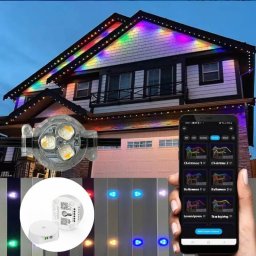
The global push toward smart city modernization is fundamentally reshaping urban planning, with intelligent illumination frameworks leading the charge. Municipalities around the world are facing mounting pressure to curb soaring energy expenditure while simultaneously improving public safety and minimizing ecological footprints. In response, local governments are rapidly replacing legacy, unmonitored streetlights with networked solid-state systems equipped with advanced management nodes. This transition is not merely about changing bulbs; it represents a deep architectural overhaul of municipal infrastructure. Modern nodes feature integrated photo-sensors, astronomical clocks, and localized mesh-networking microchips that dynamically adapt light output based on real-time atmospheric shifts and pedestrian density. By leveraging these technologies, cities can achieve energy savings exceeding forty percent compared to traditional unmanaged systems, accelerating the return on investment. Furthermore, central management software provides operators with unprecedented granular visibility, allowing them to pinpoint localized electrical failures instantly, optimize maintenance routing, and significantly reduce operational overhead. This profound wave of urban grid modernization acts as a massive catalyst, propelling the Outdoor Lighting Controller Market analysisinto a sustained era of high-volume deployment across both developed and rapidly urbanizing developing nations.
Concurrently, the commercial and industrial sectors are undergoing an identical revolution as corporate entities prioritize environmental sustainability and operational efficiency. Large-scale manufacturing complexes, global logistics hubs, extensive multi-level parking structures, and corporate campuses require powerful, robust illumination to maintain rigorous security protocols and operational safety around the clock. By implementing intelligent control topologies, these enterprises can deploy advanced scheduling strategies, localized motion-activated dimming zones, and detailed power-metering diagnostics. These systems integrate seamlessly with building automation networks via protocols like BACnet or LonWorks, turning exterior illumination into a responsive, data-rich sub-component of the broader corporate real estate ecosystem. This interoperability allows facilities managers to generate verifiable sustainability reports, ensuring compliance with strict regional green building certifications like LEED or BREEAM. Moreover, the long-term cost benefits of predictive maintenance—where software signals an impending component failure before it actually occurs—are prompting commercial real estate developers to mandate intelligent systems at the initial design phase of new construction projects. As public and private infrastructure investments continue to intertwine, the adoption of networked control devices is solidifying its position as a standard baseline requirement worldwide.
Frequently Asked Questions
What are the primary communication protocols used by modern outdoor lighting controllers?
Modern systems rely heavily on both wireless and wired mesh communication frameworks to transmit data over expansive geographic distances. Power-line communication stands as a reliable wired alternative, while wireless topologies frequently utilize cellular networks, LoRaWAN, and Zigbee to establish resilient, self-healing networks that connect individual fixtures directly to centralized cloud management platforms.
How do these specialized control systems contribute directly to environmental conservation?
Beyond drastically lowering carbon emissions through optimized power consumption, these controllers enable precise dynamic dimming schedules that mitigate the harmful effects of artificial light pollution. By lowering illumination levels during low-traffic midnight hours and efficient optical shielding, they help protect nocturnal ecosystems and restore natural biological rhythms for local wildlife.
➤➤➤Explore MRFR's Related Ongoing Coverage In Semiconductor Industry:
Debt Collection Software Market
AI in Video Surveillance Market
Distributed Acoustic Sensing Market